
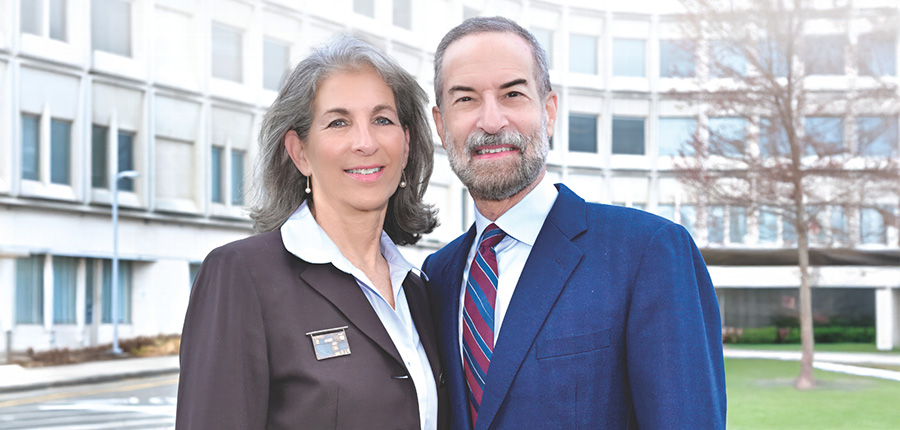
Lisa and Mark Schwartz, AB ’76, MBA ’79, MPP ’79, have long believed that the surest way to strengthen health care—and, in turn, communities—is to invest in people.
Their latest gift to Harvard Medical School, a $6 million commitment establishing the Mark and Lisa Schwartz HST MD-PhD Fellowship Fund, does exactly that. The fund will provide financial aid to MD-PhD students in the Harvard-MIT Program in Health Sciences and Technology (HST), a collaboration among HMS, the Massachusetts Institute of Technology, Harvard University, and Boston-area teaching hospitals that integrates science, engineering, and medicine to solve problems in human health.
The fund will also be used to expand the size of the MD-PhD cohort entering in 2026. Five additional HST MD-PhD students will be fully funded as a result of this gift.
“Lisa and I have been dedicated to medical research and medical education for decades,” says Mark Schwartz, a member of the HMS Board of Fellows. “That’s an important philanthropic priority for us.”
The new fellowships come at a pivotal time. Historically, the National Institutes of Health (NIH) Medical Scientist Training Program (MSTP) and F30 fellowships have provided critical scholarship support for MD-PhD students. Recent federal funding cuts, however, eliminated $9.37 million in support for the Harvard/MIT MD-PhD Program.

HST students make up the majority—about 65%—of Harvard’s MD-PhD student population. |
|---|
In the face of these cuts, the Schwartzes saw an opportunity to step in.
“The suspension of this NIH funding, particularly for the MSTP program, which has proven to be highly effective in training physician-scientists, prompted our investment in the MD-PhD program,” Mark says.
The Harvard/MIT MD-PhD Program trains the next generation of physician-scientist leaders, providing rigorous preparation across basic and translational science, bioengineering, and the social sciences. These students undertake up to eight years of intensive dual training designed to bridge scientific discovery and patient care.
For the Schwartzes, supporting these students is a natural extension of their long-standing belief in educational and clinical talent pipelines.
“PhD and MD-PhD programs are essential pathways for this kind of talent,” Lisa says. “You’re trying to attract the best students and make their education affordable. That’s a good mission to be dedicated to.”
The Schwartzes have seen firsthand what this kind of investment can yield. “We’ve met a number of HMS students and have been truly inspired by them,” Lisa says. “We’re confident that they’re not only getting a superb medical education, but that they are well-rounded individuals with strong character, high integrity, and a real sense of mission.”
Over the past three decades, Mark says, he and Lisa have watched physician-scientists push the boundaries of research while providing remarkable bedside care. That combination of scientific rigor and deep compassion is exactly what they hope to foster through this fellowship. “We couldn’t be prouder to support this endeavor at HMS,” he says.
Their philanthropy reflects a broader conviction that health care underpins every thriving society. “Investing in education and health care is the most effective way to lift communities and raise standards of living,” Mark says.
HMS Dean George Q. Daley, AB ’82, MD ’91, PhD, underscores the impact of the Schwartzes’ gift. “By establishing this fellowship fund, Lisa and Mark are strengthening the very heart of Harvard Medical School—our people,” says Daley. “In these challenging times, their unwavering support ensures that HMS can continue to lead in discovery, education, and patient care. We are deeply grateful for their partnership and vision.”
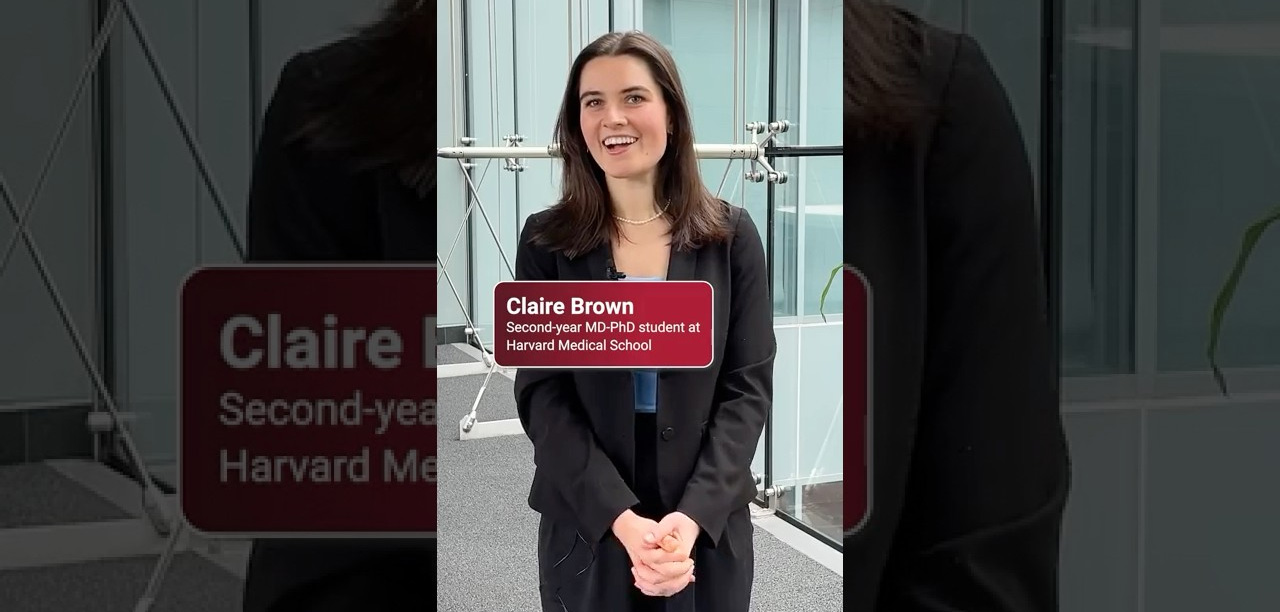
Harvard HST MD-PhD student shares her motivation for cancer research
Harvard/MIT MD-PhD Program
The Harvard/MIT MD-PhD Program’s mission is to train the next generation of physician-scientist leaders, who represent a rich spectrum of clinical disciplines and research areas from basic and translational sciences to bioengineering to the social sciences.