
Three pioneering research projects, led by Harvard Medical School faculty with funding support from the Gates Foundation, are shaping the future of global health. Through large-scale collaborative grants, investigators are developing digital resources for infectious diseases, advancing artificial intelligence for clinical decision support, and championing a more people-centered approach to health systems worldwide.
A cloud data resource to accelerate tuberculosis research
Grant recipient: Peter Sorger, AB ’83, PhD, the Otto Krayer Professor of Systems Pharmacology in the Blavatnik Institute at HMS.
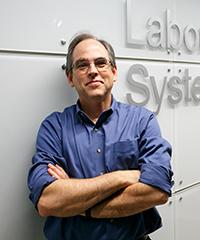
Image: Gretchen Ertl
Sorger’s team is leading an ambitious initiative to create the Tuberculosis Data Resource (TBDR)—a shared electronic platform that integrates diverse types of spatial biology data from collaborators around the globe, including partners in South Africa. Spatial biology is an approach to collecting precise molecular data from intact tissues that builds on and extends the critical role played by pathology in diagnosing and studying disease. It also represents a new way to study TB infection at the level of individual cells and entire organs.
“Our overall goal is to collect entirely new types of data on TB-infected tissues and then make them freely available through an electronic resource for TB researchers worldwide,” says Sorger. “Although the TBDR is focused on tuberculosis, it can be readily adapted to other infectious diseases.” The team is also committed to making sure a century of hard-won knowledge about infectious disease pathology, much of which was developed in the first half of the 20th century, is not lost by capturing it in digital form.
Sorger and his collaborators, using a recent grant of nearly $1 million from the Gates Foundation and building on previous work in this space, are generating and curating data for the TBDR, as well as developing the software and visualization tools needed to make it readily usable by scientists and clinicians. The platform brings together data from spatial biology approaches such as multiplexed immunofluorescence, spatial transcriptomics, and 3D tissue reconstruction, along with analytical methods based on artificial intelligence. This combination will enable a team science approach spanning continents.
“By making these advanced datasets available through open-source, cloud-based tools, we hope to accelerate the development of effective TB vaccines and empower researchers everywhere to uncover new targets and strategies against TB and related diseases,” Sorger says.
Powering better clinical care through AI
Grant recipient: Marinka Zitnik, PhD, associate professor of biomedical informatics at HMS.
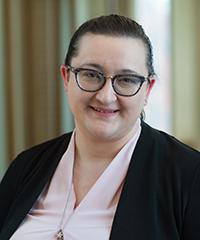
Image: Gretchen Ertl
Zitnik and her team, with nearly $900,000 in Gates Foundation funding, are building advanced artificial intelligence systems that leverage knowledge graphs to enhance evidence-based clinical decision-making. Their work is aimed especially at health care professionals, policymakers, and researchers working to improve care in low-resource settings.
Knowledge graphs are digital tools that organize and link many kinds of information. In this project, they help reveal connections among diseases, treatments, guidelines, and research findings.
“This project seeks to facilitate more informed and precise clinical decision-making,” Zitnik explains, “by developing and implementing techniques to continually update, edit, and contextualize medical knowledge graphs.”
A major aim is to establish a core reference knowledge graph for the global health community, integrating scientific, local, and other relevant perspectives. “We will establish a reliable system for clinical decision support through medical reasoning, using guidelines that are specific to each country, community, and context—especially in under-resourced regions,” Zitnik says.
By continually incorporating new data, updated best practices, and regional needs into the knowledge graph platform, the team aims to close gaps between research and care worldwide, making lifesaving knowledge more accessible to all.
Making health systems work for everyone
Grant recipient: David Duong, MD ’15, MPH, director of global primary health care and an instructor in global health and social medicine at HMS, as well as an instructor in medicine at Brigham and Women’s Hospital.
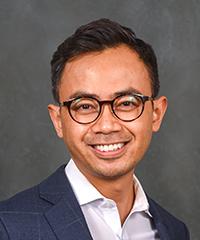
To radically re-center health care systems and improve the quality and equity of health care on a global scale, Duong is playing a key leadership role with the Lancet Global Commission for People-Centered Care for Universal Health Coverage. This paradigm shift in care emphasizes collaboration among health systems, people with lived experience of illness, and communities to address biomedical and social factors, empowering everyone to actively participate in their health and the health of their communities.
Duong and HMS colleagues Bethany Holt, MD, MPH ’22, and Todd Pollack, MD, alongside 31 commissioners, will create a clear, practical definition of people-centered care, with support from a $500,000 Gates Foundation grant. They will also design a framework that shows how people-centered care can work in real-world settings, devise ways to measure progress, and identify best practices for meaningfully engaging individuals with lived experience and the broader community in health care decision-making. Additionally, they will develop a toolkit of strategies for implementing equitable and effective care at all levels—from national policy to community programs—and make these resources publicly available and adaptable to various countries and contexts.
Duong notes, “Storytelling will feature prominently, with the goal of fundamentally reshaping our health care systems by focusing on the experiences of patients, people, and communities, putting research findings in a human context, and elevating different knowledge and communication paradigms.”