
Human Frontier Science Program
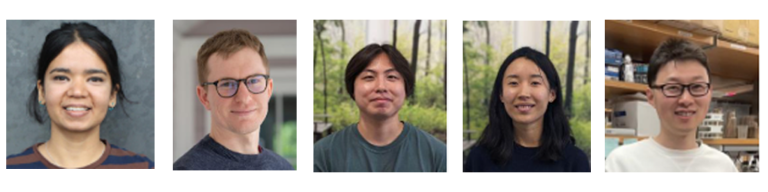
The Human Frontier Science Program awarded postdoctoral fellowships of more than $200,000 each to five research fellows in the Blavatnik Institute at HMS:
- Divya Choudhary, PhD (systems biology), will investigate why some bacteria survive antibiotic treatment while others do not, even when genetically identical. By mapping the genes and responses that help bacteria evade antibiotics, her work aims to uncover new ways to combat drug-resistant infections.
- Michael Currie, PhD (biological chemistry and molecular pharmacology), will study how Notch proteins form contact points (“synapses”) between cells, and the role of the cell’s internal scaffolding in this process. His work will reveal, for the first time, how these synapses are organized and function in both lab-grown cells and tissue models, advancing understanding of cell communication in development and disease.
- Kazuya Nozawa, PhD (neurobiology), will study whether dopamine-producing brain cells can send signals backward from their long-range projections to the cell body, triggering dopamine release in this area. His research could reshape how scientists understand the directionality of communication in the brain.
- Ke Yang, PhD (neurobiology), will investigate how neurons sort and transport different types of calcium channels to specific locations within the cell, a process essential for brain function. Her research will uncover how these channels reach their correct destinations, shedding light on the mechanisms behind neurodevelopmental and neurodegenerative diseases.
- Chen Zhang, PhD (microbiology), will investigate how the protective crystalline protein layer, known as the S-layer, is built and remodeled in the bacterium Bacillus anthracis, as well as its role in the cell’s survival and virulence. Uncovering this could reveal new ways to target dangerous pathogens.
Commonwealth Fund

For nearly 30 years, the Commonwealth Fund Fellowship in Minority Health Policy at Harvard University has prepared physicians for leadership roles in health policy and public health, equipping them with the tools needed to transform health care delivery systems for historically marginalized populations. The Commonwealth Fund renewed its support for the fellowship in 2025 with a grant of over $936,000. This work will be carried out under the direction of Joan Y. Reede, MD, MPH ’90, SM ’92, MBA, dean for culture and community engagement at HMS.
Dutch Research Council

The Dutch Research Council awarded individual grants totaling over $570,000 to Bastijn van den Boom, PhD, and Miloš Tišma, PhD, both research fellows in the Blavatnik Institute at HMS. Van den Boom (neurobiology) uses advanced imaging to study how different parts of the brain work together to control movement and decision-making. This work may shed light on disorders such as Parkinson’s disease, obsessive-compulsive disorder, and addiction. Tišma (biological chemistry and molecular pharmacology) is studying whether certain proteins inside bacteria influence the occurrence of mutations and help germs become resistant to antibiotics. By understanding this in harmful bacteria, he hopes to find new ways to prevent antibiotic resistance.
European Molecular Biology Organization
The European Molecular Biology Organization (EMBO) awarded a total of nearly $560,000 in EMBO Postdoctoral Fellowships to four research fellows in the Blavatnik Institute at HMS:
- Bastijn van den Boom, PhD (neurobiology), will use advanced optical and genetic tools to study how the brain decides what movement or behavior to do next by recording and manipulating specific brain circuits in live animals. The findings will provide new understanding of how the brain makes decisions and could reveal why disruptions in these pathways contribute to mental health disorders.
- Charlotte Piette, PhD (neurobiology), will study how changes in glucocorticoids (stress hormones) affect neuronal circuits and interact with chemicals like dopamine to control spontaneous, self-motivated behaviors in mice. The findings will help explain how hormones guide internal states and actions on fast timescales and possibly inform understanding of stress-related and mood disorders.
- Dimitrie Ivancic, PhD (genetics), will create a new way to simultaneously track various versions of a protein, examining where they go and how they act inside tissues. By testing this method on a protein from HIV, his research could show how minor protein variations impact their behavior in the body, aiding scientists in creating more effective drug delivery methods.
- Eleanor Minogue, PhD (cell biology), will study how the lower oxygen levels in body tissues (compared to the air we breathe) influence the activity and effectiveness of T cells used in cancer immunotherapy. She will also develop a new tool to monitor the effects of oxygen on these cells over time.
The Mark Foundation for Cancer Research
The Mark Foundation for Cancer Research awarded $500,000 to support a project led by Peter Sorger, AB ’84, PhD, the Otto Krayer Professor of Systems Pharmacology in the Blavatnik Institute at HMS, and Sandro Santagata, MD, PhD, an associate professor of systems biology at HMS and an associate professor of pathology at Brigham and Women’s Hospital. Sorger and Santagata aim to identify and molecularly characterize spatial hallmarks—distinct, recurring patterns of cells and structures within the tumor microenvironment—using advanced imaging and computational analysis in glioblastoma and melanoma. By defining these signatures, they hope to enable new tests and treatments that use biological markers, not just genetic information, to detect and fight cancer.
The Helen Hay Whitney Foundation
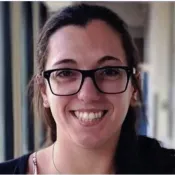
The Helen Hay Whitney Foundation awarded postdoctoral research fellowships of $229,500 each to two research fellows in the Blavatnik Institute at HMS: Victoria Marando, PhD (microbiology), and Jiaxi Zhao, PhD (genetics). Marando will study how the enzyme OGT, linked to diseases like diabetes and cancer, performs its many roles in cells. Using new genetic tools to dissect OGT’s different activities, this research could show how to harness OGT for new therapies, particularly against cancer.
Zhao will use advanced stem cell techniques to compare the speed of early development among multiple species, aiming to uncover the molecular and cellular factors that control these timing differences. This work will reveal fundamental aspects of human growth and aging, with potential to advance medicine and tissue engineering.
Paris Brain Institute America
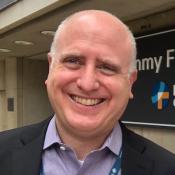
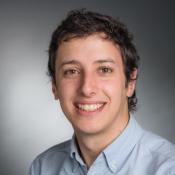
Paris Brain Institute America is supporting a collaborative project with a $420,000 grant to investigate how glioblastoma, an aggressive brain cancer, becomes resistant to treatment, and to find ways to overcome this resistance. The research team includes Peter Sorger, AB ’84, PhD, the Otto Krayer Professor of Systems Pharmacology in the Blavatnik Institute at HMS; Sandro Santagata, MD, PhD, an associate professor of systems biology at HMS and an associate professor of pathology at Brigham and Women’s Hospital; Keith Ligon, MD, PhD, an HMS associate professor of pathology at Dana-Farber Cancer Institute; and Mehdi Touat, MD, PhD, from the Paris Brain Institute. By analyzing tumor cells and their surroundings in patient samples using advanced imaging, the team hopes to find new treatment targets and drug combinations that could improve outcomes for glioblastoma patients and others with difficult-to-treat cancers.
Richard A. and Susan F. Smith Family Foundation

Rachel Wolfson, PhD (MIT ’17), MD ’19, an assistant professor of cell biology in the Blavatnik Institute at HMS, received a Smith Family Award for Excellence in Biomedical Research from the Richard A. and Susan F. Smith Family Foundation. Wolfson will use this $400,000 award to study, in mice, the different types of sensory neurons that connect to the pancreas, examining their shapes and functions with advanced genetic and imaging tools. Her research aims to reveal how these neurons affect pancreatic health and disease, potentially leading to new treatments for conditions like diabetes and pancreatitis.
Damon Runyon Cancer Research Foundation
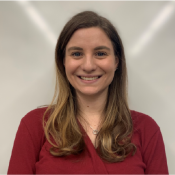
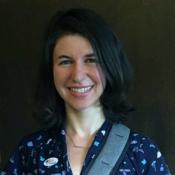
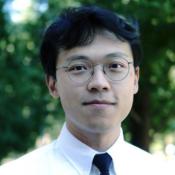
The Damon Runyon Cancer Research Foundation recognized three scientists in the Blavatnik Institute at HMS with the Dale F. Frey Award for Breakthrough Scientists, a $100,000 prize presented to alumni of the Damon Runyon Fellowship who show exceptional potential for transformative cancer research. The recipients are:
- Rachel Greenberg, PhD, research fellow in cell biology. During her fellowship, she studied how sensory neurons in the female reproductive tract adapt during pregnancy and labor, revealing how these neurons may influence hormone-dependent cancers.
- Erin Lacy, PhD, research associate in neurobiology. During her fellowship, she discovered how neurons rapidly regulate gene expression by controlling RNA stability in response to activity, identifying molecular mechanisms that have implications for both brain development and cancer.
- Qinheng Zheng, PhD, assistant professor of biological chemistry and molecular pharmacology. During his fellowship, he developed the first effective covalent inhibitor targeting the KRAS(G12D) mutation—a challenging cancer driver—and created new chemical tools to advance precision cancer therapeutics.
American Heart Association
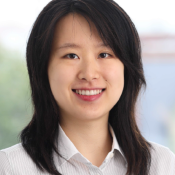
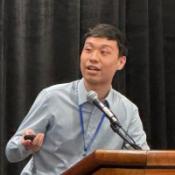
The American Heart Association (AHA) awarded just over $300,000 in postdoctoral and predoctoral fellowships:
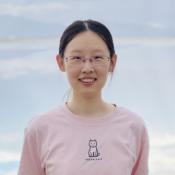
- Buyan Pan, PhD, a research fellow in cell biology in the Blavatnik Institute at HMS, will use advanced microscopes and cell-based experiments to investigate how certain proteins shape an important network-like structure inside cells, essential for organ health. This research will help explain how defects in this structure can lead to diseases like heart disease, potentially pointing to new prevention or treatment strategies.
- Shulin Mao, a PhD student in the Biological and Biomedical Sciences Program at HMS and Boston Children’s Hospital, will use a new method called “Duplex-Multiome” to find somatic mutations in individual heart cells and investigate how they affect gene activity during aging. This work will reveal how genomic changes relate to heart aging and suggest new ways to prevent or treat age-associated heart disease.
- Jiayin Tang, a PhD student in the Biological and Biomedical Sciences Program at HMS, will investigate how itaconate, a substance made by immune cells, impacts the activity of brown fat, which burns energy and may help combat obesity and heart diseases. Understanding this immune-fat conversation could unlock new, safer approaches to treating obesity and heart problems.
China Medical Board

China Medical Board is providing $250,000 for a postdoctoral research fellowship program at HMS under the direction of David Duong, MD ’15, MPH, director of global primary health care and an instructor in global health and social medicine at HMS, as well as an instructor in medicine at Brigham and Women’s Hospital. The fellowship program will support the Lancet Global Commission for People-Centered Care for Universal Health Coverage, convened and managed by HMS, which seeks to re-center health care systems and improve the quality and equity of health care globally. Duong is a co-leader of the commission.
Ballad Health
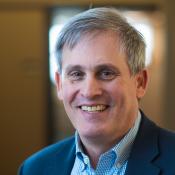
Michael Chernew, PhD, the Leonard D. Schaeffer Professor of Health Care Policy in the Blavatnik Institute at HMS and director of the Healthcare Markets and Regulation Lab at HMS, will receive an additional $250,000 from Ballad Health to continue studying the competitive dynamics of small rural hospital markets.
Cancer Research Institute
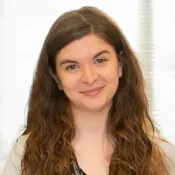
Pilar Baldominos Flores, PhD, a postdoctoral fellow in the Department of Cell Biology in the Blavatnik Institute at HMS, received a Cancer Research Institute Irvington Postdoctoral Fellowship. With this $243,000 award, she will use advanced mouse models to study how interactions between the immune system and genetic mutations determine whether early cancer cells are eliminated or escape detection to become breast tumors. By identifying which mutations allow emerging tumors to evade immune surveillance, her research aims to inform new strategies for cancer prevention in its earliest stages.