
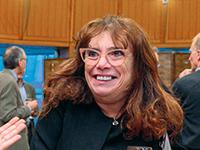
Debora Marks, PhD, a professor of systems biology in the Blavatnik Institute at HMS, is leading a team of researchers working to improve vaccine design for the highly pathogenic avian influenza H5N1. With $942,000 in funding from the Coalition for Epidemic Preparedness Innovations, the team is developing computational models to predict antigen variation, ensuring vaccine effectiveness against diverse viral strains. In collaboration with Houston Methodist Research Institute, Marks and her team aim to design and test antigenic elements and create interactive tools for immunogen design, ultimately producing validated immunogens and user-friendly software.

The Pew Charitable Trusts selected Silvi Rouskin, PhD, an assistant professor of microbiology in the Blavatnik Institute at HMS, to join the Pew Scholars Program in the Biomedical Sciences. Rouskin will receive $300,000 to create an RNA structure database and a machine-learning algorithm to predict RNA structures directly from sequences. By improving RNA structure prediction, Rouskin aims to enhance understanding of RNA’s role in gene regulation and advance RNA-targeting drug design, impacting both research and therapeutic applications. Additionally, Guido Petrovich, PhD, a research fellow in biological chemistry and molecular pharmacology in the Blavatnik Institute at HMS, will receive $130,000 through the Pew Latin American Fellows Program. Petrovich seeks to identify the molecular mechanisms by which triatomine bugs locate humans and transmit Chagas disease, aiming to develop pharmacological tools to modulate bug behavior and curb disease transmission.

The Target ALS Foundation awarded Isaac Chiu, AB ’02, PhD ’09, a professor of immunology in the Blavatnik Institute at HMS, $250,000 to study innate immune and apoptotic pathways in amyotrophic lateral sclerosis (ALS) and frontotemporal dementia. His work aims to identify how specific innate immune molecules such as Gasdermin E and antiviral signaling pathways drive cell death in ALS. This project is co-led by three researchers at Massachusetts General Hospital: Mark Albers, MD ’95, PhD ’95, an HMS assistant professor of neurology; Clotilde Lagier-Tourenne, MD, PhD, an HMS associate professor of neurology; and Brian Wainger, MD, PhD, MMSc ’15, an HMS associate professor of anesthesia and of neurology.
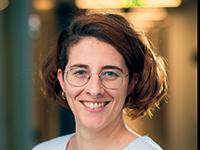
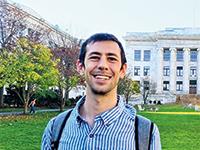
The Parkinson’s Foundation granted a total of $284,000 to two researchers in the Blavatnik Institute at HMS working toward potential therapeutics for Parkinson’s disease. Daniel Finley, AB ’80, PhD, a professor of cell biology, is studying a drug-like compound, IU1-366, evaluating its potential to offset Parkin protein deficiency in Parkinson’s disease by enhancing an alternative pathway that helps eliminate defective and toxic mitochondria, which Parkin would normally neutralize. Ines Patop, PhD, a postdoctoral fellow in genetics, is exploring gene regulation and mitochondrial function in dopaminergic neurons carrying mutations associated with Parkinson’s disease, focusing on genetic information transport and identifying contributing factors to the disease’s pathology.

Diane Mathis, PhD, the Morton Grove-Rasmussen Professor of Immunohematology in the Blavatnik Institute at HMS, secured a $402,500 grant from Cure Alzheimer’s Fund to explore regulatory T cells (Tregs) in the human meninges and their potential link to Alzheimer’s disease (AD). By analyzing and comparing Treg populations in autopsy samples from individuals with and without AD, she aims to develop therapeutic strategies using Tregs to slow AD progression.

The International OCD Foundation granted $500,000 to Steven A. McCarroll, PhD, the Dorothy and Milton Flier Professor of Biomedical Science and Genetics in the Blavatnik Institute at HMS. McCarroll aims to uncover molecular and cellular changes in obsessive-compulsive disorder (OCD) by generating single-cell-resolution RNA expression data from over 600,000 cells using brain tissue from OCD donors. His goal is to compare these findings with matched controls to better understand the pathophysiology of OCD and its neuroimaging and electroencephalography features.
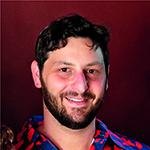
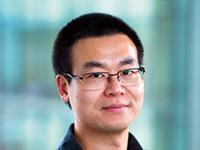
Two research fellows in the Blavatnik Institute at HMS collectively received nearly $417,000 in Charles A. King Trust Postdoctoral Fellowship Awards. Ying Liu, PhD (Department of Genetics), is studying cancer cachexia—a wasting syndrome where tumors disrupt host organ function remotely— in a fruit fly model, aiming to understand its root causes and identify new therapeutic opportunities. Caleb Weinreb, PhD ’19 (Department of Neurobiology), is investigating dopamine’s role in the prefrontal cortex and its impact on decision making and behavior by observing mice in naturalistic settings, with implications for understanding psychiatric disorders.

Lucas Farnung, PhD, an assistant professor of cell biology in the Blavatnik Institute at HMS, has secured another $400,000 in funding from the Damon Runyon Cancer Research Foundation to continue his research on the molecular mechanisms underlying MLL-rearranged leukemias. This extension follows successful progress made during the initial two-year term of his Damon Runyon-Rachleff Innovation Award. A distinct subset of leukemias arises from chromosomal translocations in the mixed lineage leukemia (MLL) 1 gene. This ongoing research may contribute to the development of anti-leukemia therapeutics, addressing a significant unmet medical need.

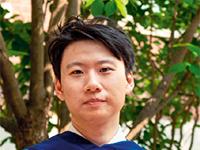
The American Cancer Society awarded a total of $435,000 in postdoctoral fellowships to two cell biology researchers in the Blavatnik Institute at HMS. Songhua Hu, PhD, is studying a byproduct of NAD+, a coenzyme crucial for energy metabolism. He is evaluating its role in regulating fatty acid oxidation and inhibiting early-onset colorectal cancer growth, potentially leading to dietary interventions to improve treatment outcomes. Zongyu Li, PhD, is examining glycerol’s influence on obesity-related cancer development, using advanced techniques to understand its effects on tumor growth, with the goal of mitigating the impacts of a high-fat diet on cancer progression.

Rachel Wolfson, MD ’19, PhD, an assistant professor of cell biology in the Blavatnik Institute at HMS, received a $700,000 award from the Burroughs Wellcome Fund to study five subtypes of dorsal root ganglion sensory neurons in the gastrointestinal (GI) tract. Her research investigates the roles of these neurons in motility and satiety in the upper GI tract, with the goal of identifying therapeutic targets for common GI disorders, including constipation, diarrhea, early satiety, and abdominal pain.
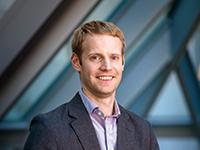
Andrew Kruse, PhD, a professor of biological chemistry and molecular pharmacology in the Blavatnik Institute at HMS, received the 2024 Richard A. Smith Excellence in Biomedical Research Prize from the Richard and Susan Smith Family Foundation, worth $250,000. The Kruse Lab researches signal transduction across cell membranes, focusing on the role of membrane proteins like G protein-coupled receptors in human health and disease, using techniques such as protein engineering and structural biology.