
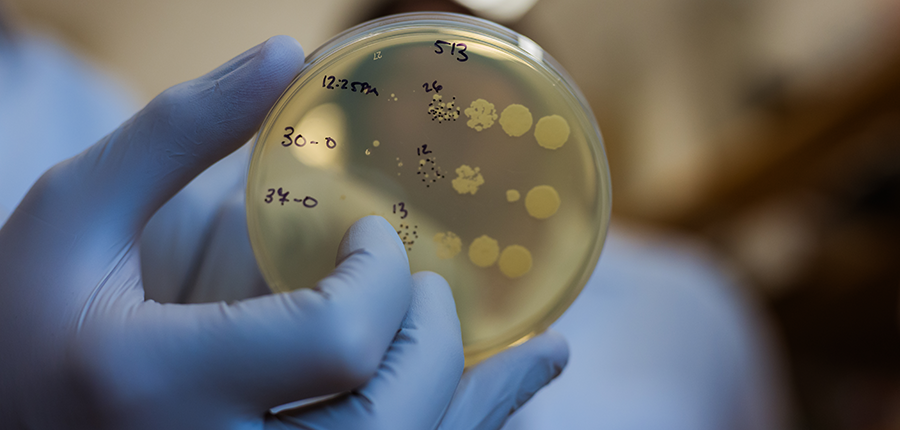
Researchers in the Department of Genetics examine a petri dish in the laboratory. Image: Gretchen Ertl
A bequest from the Lisa S. Palmer 2005 Separate Property Trust will support cancer and Alzheimer’s disease research at Harvard Medical School, with nearly $225,000 designated for each area.
Elizabeth “Lisa” Stone Palmer, an English teacher, had deeply personal connections to both diseases. She and her mother had Alzheimer’s disease, while her husband, James Albert Palmer, died from bladder cancer. Lisa passed away in September 2024.
Her generosity reflects how personal experiences can inspire a lasting commitment to medical research. The bequest will help HMS investigators better understand, prevent, diagnose, and treat these diseases, which profoundly affect patients and families.
Although Alzheimer’s continues to pose significant clinical and scientific challenges, recent advances have shown that it is possible to intervene in the disease. The FDA has approved two drugs, lecanemab and donanemab, that can slow cognitive decline in people with early Alzheimer’s. The emergence of these treatments makes funding, like Palmer’s estate gift, for Alzheimer’s research especially important now.
“I think we’re now poised to have a substantial impact on the disease,” says Bruce Yankner, MD, PhD, a professor of genetics in the Blavatnik Institute at HMS and co-director of the Paul F. Glenn Center for Biology of Aging Research at HMS. Yankner studies the molecular genetics of aging and neurodegenerative disorders. Researchers in his lab discovered that lithium is found naturally in the brain and other tissues and may play a key role in Alzheimer’s. Their findings revealed significantly reduced lithium levels in the brains of older adults experiencing early memory loss, with further decline as Alzheimer’s progresses. In mouse models, lithium orotate successfully reduced Alzheimer’s-related pathology and restored memory.
“This is the time to push the boundaries of research on Alzheimer’s in many directions,” Yankner says—a goal that philanthropic support, including Lisa Palmer’s bequest, can help make possible.

By sharing their bequest intentions, donors help ensure that their gifts have the intended impact and give School leaders the information needed to anticipate and prepare for future needs. Donors also receive updates from the School about the programs and initiatives their gifts will support. |
|---|